
Technology Note 223
Labeling Strategies
There are two labeling methods, direct and indirect. Direct labeling (also known as primary labeling) labels a primary molecule of interest. Indirect labeling uses a secondary label to detect the molecule of interest.
Direct Labeling
Direct labeling (Figure 1A) reduces experiment times and can reduce non specific binding. There are a variety of labeling kits available through Life Technologies’ website (search “Labeling Kits”). Zenon dye, for example, directly labels the Fc portion of an antibody. The disadvantage to using direct labeling is that any modification to the target molecule can affect binding characteristics. Also, it can be more expensive and difficult to make if commercial kits are unavailable.
Indirect Labeling
Indirect labeling (Figure 1B) is the most common labeling strategy. There are a wide variety of commercially available secondary antibodies that are fairly inexpensive. We have had good results with labels from Jackson Labs (jacksonimmuno.com). See Table 1 for more strategies.
If the target molecule is not an antibody and lacks a tag, a complimentary antibody can be used. The complimentary antibody can be directly labeled (Figure 2A) or indirectly labeled (Figure 2B).
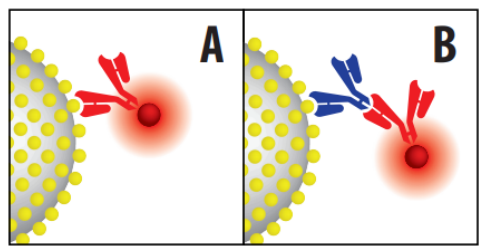
Figure 1: (A) Direct Labeling. (B) Indirect Labeling.
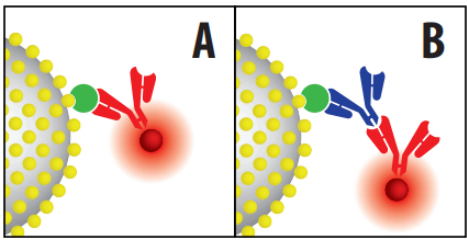
Figure 2: (A) Directly labeled complimentary antibody. (B) Indirectly labeled complimentary antibody.
| Label Type | Description |
|---|---|
| Anti-species (H+L)* | Antibodies that bind to multiple epitopes on an antibody. |
| Anti-species Fc specific* | Antibodies that bind to the Fc portion (tail) of the antibody. |
| Anti-species subclass specific* | Antibodies that bind to a specific subclass of IgG (e.g. 1, 2a, 2b, 3). |
| Anti-species Fab or (Fab)2 specific* | Antibodies that bind to a Fab or (Fab)2 fragment. |
| Anti-Tag Antibodies | Antibodies that bind to a variety of tags on target molecules (e.g. Biotin, Flag, HIS-tags, etc). |
| Labeled Streptavidin | Protein that binds to biotinylated molecules. |